Skip to content News
News
Hold a printed QOSH certificate?Verify it instantly
NewsNewsNearly 19,000 workers die every year from excessive heat, and 2.4 billion are exposed to it on the job. As temperatures climb, heat stress is moving from a seasonal nuisance to a year-round occupational emergency and most workforces are
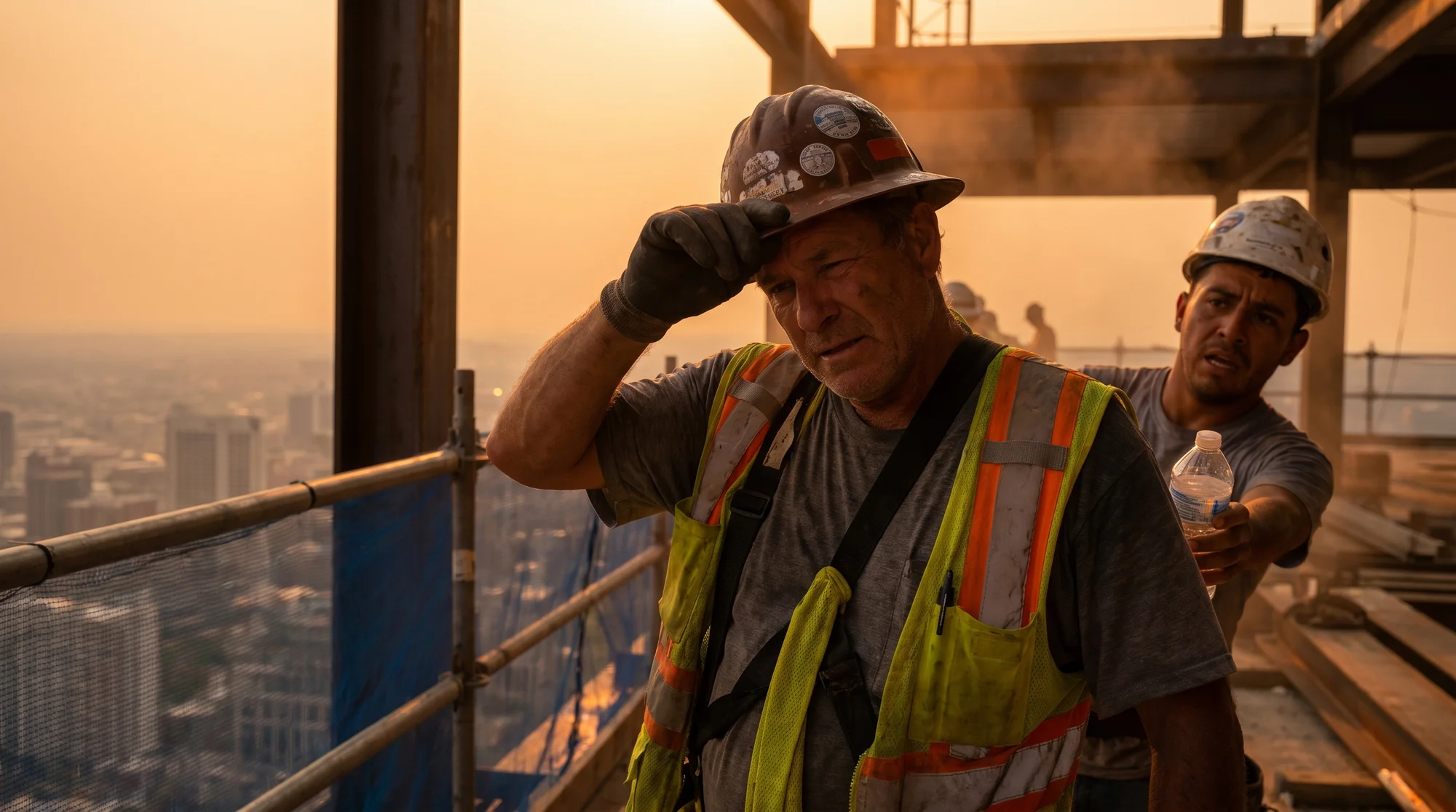
It rarely makes headlines the way a scaffold collapse does. There is no dramatic moment, no twisted metal. A worker simply slows down, becomes confused, stops sweating and by the time anyone notices, the damage is done. Heat is the hazard that hides in plain sight.
The scale is staggering. The International Labour Organization estimates that more than 2.4 billion workers over 70% of the global workforce are exposed to excessive heat at some point during their work. That exposure translates into roughly 22.85 million occupational injuries and nearly 19,000 deaths every single year, according to figures detailed by the American Industrial Hygiene Association.
"Climate change is already having serious impacts on the safety and health of workers in all regions of the world."
That single sentence, from the ILO's landmark report Ensuring Safety and Health at Work in a Changing Climate, reframes heat not as a summer inconvenience but as a structural, escalating threat. And the trend line is the wrong direction: exposure to excessive heat rose 8.8% globally between 2000 and 2020, with some regions seeing far steeper climbs.
The danger is also widely misunderstood. Many assume heat illness is an outdoor, midday problem. The evidence says otherwise. A detailed review of work-related heat deaths found that several occurred during indoor work, where the critical risk factor was low air velocity stagnant, poorly ventilated spaces where the body simply cannot shed heat. Perhaps most sobering: a cluster of deaths occurred in workers within their first week on the job, underlining how dangerous it is to put unacclimatised people into hot conditions without supervision or a phased ramp up.
Regulators are responding, unevenly. OSHA has advanced a proposed federal Heat Injury and Illness Prevention standard, and states including California, Washington and Oregon have enacted their own heat protection rules. Gulf states have long enforced midday work bans through the summer. But regulation is a floor, not a strategy and it lags far behind the rate at which the climate is changing.
The organisations that protect their people will be the ones that treat heat as a competence issue, not a compliance checkbox. That means training supervisors to recognise the early, subtle signs of heat exhaustion, building acclimatisation protocols for new and returning workers and embedding heat-risk assessment into everyday planning the same way fall protection or confined-space entry already is.
Heat doesn't announce itself. It requires a workforce trained to see it coming. At QOSH, we believe that knowledge is the most effective cooling system any organisation can install.